Evidence-based guidance on avoiding damage, preventing hair loss, and choosing safe extension methods
Expert Insight: This comprehensive guide draws on dermatological research, safety testing from Consumer Reports, and clinical studies on extension-related hair damage. Whether you’re considering extensions for the first time or currently wearing them, understanding safety protocols is essential for maintaining both hair health and overall wellbeing.
1. Toxic Chemical Concerns in Hair Extensions
⚠ Critical Consumer Alert (2026)
Recent testing by Consumer Reports found that 90% of synthetic braiding hair products contain detectable lead, and 100% tested positive for volatile organic compounds (VOCs) that may pose health risks with extended exposure.1
The Synthetic Hair Safety Crisis
In 2024-2026, unprecedented attention has focused on the safety of synthetic hair extensions, particularly those marketed to Black women. The findings are concerning:
- Lead contamination: 9 out of 10 synthetic products contained lead levels that could be concerning for regular users over time1
- Carcinogenic compounds: Acrylonitrile and vinyl chloride (found in popular modacrylic fibers like Kanekalon) are classified as probable human carcinogens by the EPA2
- VOC exposure: Acetone, isopropylbenzene, and other volatile compounds detected in all tested products1
- Prolonged contact risk: Extensions are typically worn for 4-6 weeks continuously, creating sustained exposure unlike most beauty products2
Why This Matters for Australian Salon Customers
While much of the testing focused on synthetic braiding hair popular in the US market, the underlying concern applies to all synthetic extension products globally. Australian consumers deserve transparency about what materials are being placed on their heads for weeks or months at a time.
✓ EH Hair Extensions Safety Commitment
At EH Hair Extensions across Gold Coast, Brisbane, Melbourne, and Sydney, we exclusively use 100% Remy human hair – no synthetic materials, no mystery chemicals. Our human hair undergoes quality inspection for cuticle alignment and colour consistency, providing you with extensions that are as safe as they are beautiful.3
Chemical Exposures in Professional Salons
Beyond the extensions themselves, salon environments can expose both stylists and clients to chemical mixtures. A 2025 study found elevated levels of endocrine-disrupting chemicals in hairdressers, with specific exposure from:4
- Chemical straightening/relaxing treatments (often applied before extension installation)
- Semi-permanent hair colour systems
- Hair styling products containing parabens
- 2-naphthol (from various hair care products)
What you can do: Ask your stylist about the chemical treatments they use and whether ventilation is adequate. At EH Hair salons, we prioritise well-ventilated spaces and disclose all products used during your service.
2. Preventing Traction Alopecia: The Most Common Extension-Related Injury
34.5% Prevalence of traction alopecia among women who regularly wear extensions in clinical studies5
What is Traction Alopecia?
Traction alopecia is a form of permanent hair loss caused by repeated pulling or tension on hair follicles. Unlike temporary shedding, traction alopecia can damage follicles irreversibly, meaning hair may never grow back in affected areas.6
According to the American Academy of Dermatology, this condition is entirely preventable with proper extension application and maintenance practices.6
High-Risk Areas for Extension Damage
- Hairline edges: The delicate “baby hairs” around your forehead and temples are most vulnerable
- Temples: Where extensions are often secured tightly for a sleek look
- Crown: Weight-bearing area that takes the most strain from heavy extensions
- Nape of neck: Often overlooked but at risk with certain application methods
Warning Signs You’re At Risk
Stop and Seek Professional Help If You Experience:
- Pain or headaches after extension application – this means they’re too tight
- Redness or bumps along your hairline or scalp
- Thinning edges or receding hairline since getting extensions
- Soreness when touching the areas where extensions are attached
- Visible scalp where extensions are installed
Prevention Strategies That Work
- Professional assessment first: A qualified extensionist should evaluate your hair density, scalp health, and existing damage before application
- Choose appropriate weight: Fine or thinning hair cannot support heavy extensions – lighter methods like tape-ins are essential7
- Avoid continuous wear: Give your natural hair 2-3 month breaks between extension sets6
- Speak up during application: Pain is NOT normal – if it hurts, it’s too tight
- Regular maintenance appointments: Extensions need adjustment every 6-8 weeks as your natural hair grows
- Protect your edges: Use water-based styling products only on hairline areas and avoid pulling edges into tight styles
✓ How EH Hair Prevents Traction Alopecia
Every EH Hair consultation includes a thorough hair and scalp assessment. Our certified extensionists are trained to:
- Identify hair types unsuitable for certain extension methods
- Recommend appropriate extension weights and installation techniques
- Apply extensions with proper tension – never painful, never damaging
- Schedule maintenance at optimal intervals to prevent strain on growing hair
- Educate clients on protecting vulnerable hairline areas
3. Safest Hair Extension Methods: Evidence-Based Comparison
Not all extension methods carry equal risk. The safest choice depends on your natural hair type, lifestyle, and commitment to maintenance.
| Method | Damage Risk | Best For | Key Safety Considerations |
|---|
| Clip-In Extensions | ✓ Lowest (Temporary) | All hair types, beginners, special occasions | Can be removed daily; no long-term tension. Must clip properly to avoid breakage.8 |
| Tape-In Extensions | ✓ Low to Moderate | Fine/medium hair, those wanting semi-permanent but gentle | No heat or glue required; lies flat. Must use proper removal solution to avoid damage.8 |
| Micro-Bead/Nano Extensions | ⚠ Moderate | Most hair types except very fine; those wanting longevity | No heat/glue, but beads weaken with each adjustment. Proper tension critical.3 |
| Fusion/Keratin Bond | ⚠ Moderate to High | Thick hair only; requires professional expertise | Heat application can damage if done incorrectly. Long-lasting but removal must be professional. |
| Sew-In/Weave | ⚠ High (if too tight) | Thick, coarse hair; protective styling | Braiding foundation must not be too tight. Heavy extensions increase traction risk.6 |
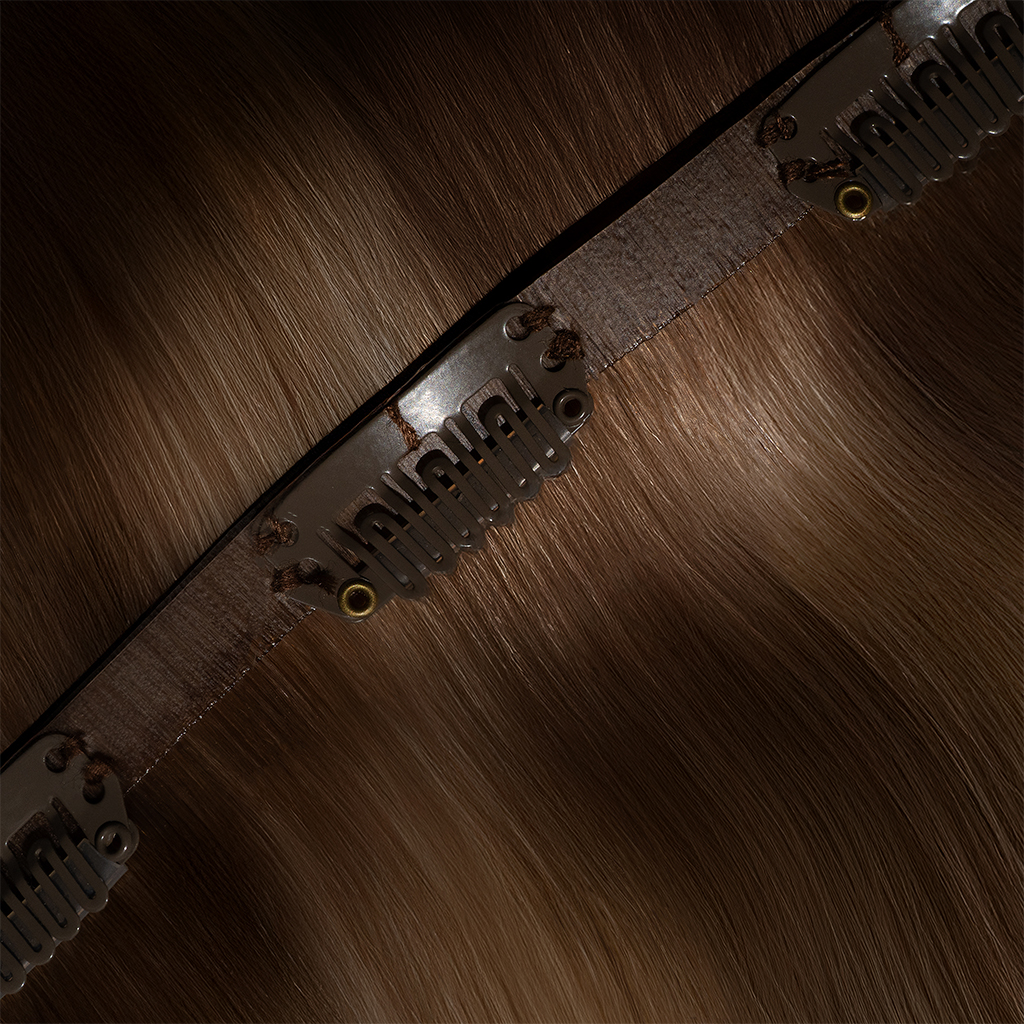
Clip In Extensions by Jadore Hair Supplies – one of the safest extension methods.
What Makes a Method “Safe”?
According to dermatological research, the safest extension methods share these characteristics:6,8
- No or minimal heat application during installation
- No harsh adhesives or chemicals that can irritate scalp
- Distributed weight rather than concentrated tension points
- Easy adjustment as natural hair grows
- Professional removal without pulling or breaking natural hair
- Appropriate for hair type – one size does NOT fit all
2026 Trend: Health-First Extension Methods
Industry experts note that 2026 consumers are prioritizing hair health over everything else. This has led to increased demand for:9
- Lightweight bonds with refined formulas
- Low-tension application techniques
- Transparent sourcing of ethically-obtained human hair
- Salon education standards around damage prevention
At EH Hair Extensions, we’ve responded to these trends by investing heavily in continuing education for our stylists and offering only methods we’ve verified to be safe through our 15+ years of experience serving Australian clients.
4. Warning Signs Your Extensions Are Causing Damage
Early detection is key to preventing permanent hair loss. Monitor yourself closely for these red flags:
Immediate Warning Signs (During/Right After Application)
- Pain, pulling sensation, or headache – Extensions should NEVER hurt
- Visible tension on scalp – You shouldn’t see your scalp pulled or distorted
- Redness or irritation – Sign of allergic reaction or too-tight application
- Difficulty moving your head comfortably – Weight is excessive
Short-Term Warning Signs (First Few Weeks)
- Excessive shedding – More than 100 hairs per day is concerning
- Itching or scalp sensitivity – Could indicate infection or irritation
- Visible hair breakage – Short broken hairs around application areas
- Extension slippage – May indicate improper application or unsuitable method
- Persistent smell or discharge – Sign of infection, requires immediate attention
Long-Term Warning Signs (After Several Months)
- Thinning hairline or edges – Classic sign of traction alopecia
- Bald patches – Areas where hair no longer grows
- Changed hair texture – Natural hair becomes brittle or wiry
- Scalp tenderness – Ongoing sensitivity indicates damage
What to Do If You Notice These Signs
- Contact your stylist immediately – Don’t wait for your scheduled appointment
- Consider removal – If damage is occurring, extensions may need to come out
- See a dermatologist – For thinning, bald patches, or persistent scalp issues
- Give your hair a break – Allow 2-3 months recovery before reinstalling
- Switch methods – Your current method may not be suitable for your hair type
5. Professional Application Safety Standards
The skill and training of your extensionist is the single most important factor in safe extension wear. Here’s what separates safe professionals from risky ones:
Qualifications to Look For
- Specialized extension training – Not just general hairstyling certification
- Ongoing education – Methods and safety standards evolve constantly
- Experience with your hair type – Different textures require different approaches
- Portfolio of work – Before/after photos showing natural-looking results
- Transparent about risks – Honest discussion of potential damage for your specific situation
Safety Red Flags During Consultation
Walk Away If a Stylist:
- ❌ Doesn’t assess your natural hair condition before recommending a method
- ❌ Pushes you toward a method you’re uncomfortable with
- ❌ Says “everyone can wear any type of extension”
- ❌ Dismisses your concerns about pain or tension
- ❌ Can’t explain their maintenance schedule and why it matters
- ❌ Uses synthetic hair without discussing health concerns
- ❌ Rushes through application without careful placement
Green Flags: Signs of a Safe, Professional Service
- ✓ Thorough consultation including scalp examination
- ✓ Discussion of your lifestyle, hair goals, and maintenance capacity
- ✓ Clear explanation of why they’re recommending a specific method
- ✓ Checking in with you throughout application about comfort
- ✓ Detailed aftercare instructions in writing
- ✓ Scheduled follow-up maintenance appointments before you leave
- ✓ Contact information for questions or concerns between visits
- ✓ Uses only high-quality materials (100% Remy human hair)
✓ EH Hair Extensions Professional Standards
Every EH Hair stylist undergoes extensive training in multiple extension methods and must demonstrate competency before working with clients. Our safety protocols include:
- Mandatory consultation and hair health assessment (never rushed)
- Written aftercare plans customized to your extension type
- Follow-up contact 48 hours post-application to check for issues
- Maintenance schedules strictly adhered to (we’ll remind you)
- Transparent pricing with no hidden costs
- Open-door policy for concerns between appointments
Book your obligation-free consultation: Call 1300 181 000 or visit ehhairextensions.com.au
6. Safe Maintenance Practices: Extending Longevity Without Damage
Proper maintenance is equally important as initial application for preventing damage. Here’s what research and clinical experience show works best:
Daily Care Essentials
- Brush gently 2-3 times daily – Use a loop brush or wide-tooth comb, starting from ends and working up10
- Sleep protection – Loose braid or silk/satin bonnet prevents tangling and breakage
- Avoid excessive heat – When using styling tools, keep below 150°C and use heat protectant
- Keep extension moisturized – Use a moisture hydrating mask.
Washing Guidelines
Frequency depends on your hair type and lifestyle, but general guidelines are:6,10
- Wash 1-2 times per week for most hair types (more if very oily, less if very dry)
- Use sulfate-free shampoo – Sulfates can dry out extensions and irritate scalp
- Focus on scalp and roots – Extension hair doesn’t produce oil
- Condition mid-shaft to ends only – Avoid getting conditioner on bonds/tapes
- Rinse in downward direction – Prevents tangling
- Pat dry, don’t rub – Vigorous towel-drying causes matting
What to Avoid
- Chlorinated pools – Chlorine weakens bonds and damages hair; wear a swim cap
- Saltwater – Extremely drying; rinse immediately after ocean swimming
- Oil-based products near bonds – Can cause slippage
- Sleeping with wet hair – Causes matting and mold risk
- Prolonged sun exposure – UV damages both natural and extension hair
- DIY removal – NEVER attempt to remove extensions yourself; damage is almost guaranteed
Maintenance Appointment Schedule
Different methods require different maintenance timelines:
| Extension Method | Maintenance Frequency | What Happens |
|---|
| Tape-In | 5-8 weeks | Tape replacement and repositioning as hair grows |
| Micro-Bead/Nano | 5-8 weeks | Beads tightened and moved up to accommodate growth |
| Fusion/Keratin Bond | 7-12 weeks | Assessment; may need removal and reinstallation |
| Sew-In/Weave | 5-8 weeks | Rebraid foundation if continuing, or removal |
| Clip-In | As needed | Check clips for damage; deep condition extensions |
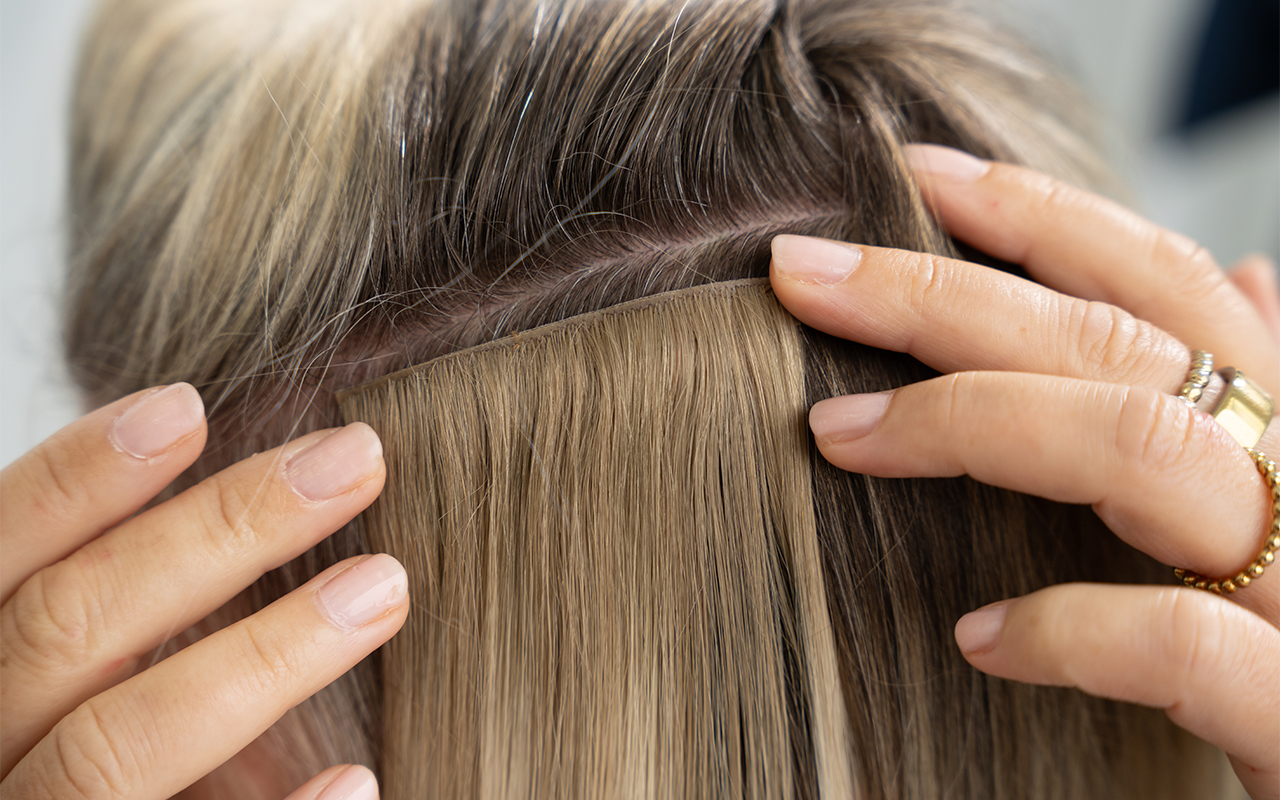
Invisible Tape Extensions. Maintenance is recommended every 5-8 weeks.
Why Maintenance Appointments Are Non-Negotiable
Skipping or delaying maintenance is the #1 cause of extension damage. As your natural hair grows, extensions move away from the scalp, creating:
- ❌ Increased weight and tension on attachment points
- ❌ Matting at the root where new growth tangles with extension hair
- ❌ Visible demarcation line (obvious extensions)
- ❌ Higher risk of breakage and permanent hair loss
At EH Hair, we schedule your next maintenance appointment before you leave each visit, and send reminder texts to ensure you stay on track.
7. Critical Questions to Ask During Your Extension Consultation
Your consultation is your opportunity to assess whether a salon prioritizes safety. Come prepared with these questions:
About Hair Quality & Sourcing
- “Do you use 100% Remy human hair or synthetic materials?”
- “Where does your hair come from, and how is it ethically sourced?”
- “What quality control measures ensure consistent hair quality?”
- “Can I see and feel samples of the hair you’ll be using?”
About Your Specific Hair & Health
- “Based on examining my hair, which method do you recommend and why?”
- “Are there any methods you would NOT recommend for my hair type?”
- “Do I have any existing damage or hair loss that should be addressed first?”
- “What are the specific risks for someone with my hair type?”
- “Can my hair support the length and volume I want, or should we start smaller?”
About Application Process
- “How long will the application take?”
- “What will you do if I feel pain or excessive pulling during application?”
- “How many extension pieces will you apply?”
- “Can you show me photos of this method on similar hair to mine?”
About Maintenance & Longevity
- “How often will I need maintenance appointments?”
- “What’s the cost of each maintenance visit?”
- “How long can I realistically wear these extensions before needing removal?”
- “What happens if I need emergency removal?”
- “Do you provide written aftercare instructions?”
About Products & Chemicals
- “What products will you use during application, and are there any chemical concerns?”
- “What shampoo and conditioner do you recommend, and why?”
- “Are there any products I should definitely avoid?”
- “Can I continue using my current styling products?”
About Removing Extensions
- “What’s the removal process like for this method?”
- “How much hair loss is normal during removal?”
- “What’s the cost of professional removal?”
- “How long should I wait before getting extensions again?”
✓ What to Expect from an EH Hair Consultation
Our consultations are thorough, honest, and pressure-free. Here’s what happens:
- Hair History Discussion (10 min): We ask about previous extensions, chemical treatments, health conditions, and your goals
- Hair & Scalp Examination (10 min): We assess hair density, texture, existing damage, scalp health, and hairline condition
- Method Recommendation (10 min): Based on assessment, we explain which methods are safe for you and why, showing samples
- Realistic Expectation Setting (5 min): We’re honest about what your hair can support and any limitations
- Pricing & Timeline (5 min): Complete cost breakdown including maintenance, no hidden fees
- Questions & Decision Time (As long as needed): We answer all your questions and never pressure you to book
✨ Consultations are obligation-free. If we don’t think extensions are right for you, we’ll tell you honestly and may suggest alternatives or waiting until your hair is in better condition.
Ready to Get Extensions Safely?
Book your comprehensive consultation at EH Hair Extensions. We’ll assess your hair, answer all your questions, and create a personalized plan that prioritizes your hair health.
Available at: Gold Coast | Brisbane | Melbourne | Sydney
Book Your Free Consultation
☎ Call 1300 181 000 |