Why Extension Lifespan Matters — and Why It Is Often Misunderstood
When clients talk about how long their extensions “last,” they are often conflating two very different things:
- How long the installation lasts — the period between professional maintenance appointments.
- How long the actual hair lasts — the total usable lifespan of the extension hair before it needs to be replaced entirely.
Tape-in extensions, for example, may need to be repositioned every 6 to 8 weeks because your natural hair grows roughly 1 to 1.5 cm per month, pushing the attachment point away from the scalp. According to StatPearls (National Library of Medicine), the average human hair grows approximately 6 inches (15 cm) per year, meaning even a well-secured bond will migrate noticeably within six to eight weeks. That 6-to-8-week appointment, however, does not mean the hair needs to be discarded — with the right care the same hair can be re-taped and reused for up to a full year.
Understanding this distinction prevents a very common mistake: clients either think their extensions “failed” when they need a routine refit, or they delay maintenance too long and genuinely shorten the life of otherwise healthy hair. This guide clarifies both timelines so you can plan your appointments and budget accurately.
Quick-Reference: How Long Do Hair Extensions Last by Method?
| Extension Type | Time Between Appointments | Total Hair Lifespan (with care) | Reusable? | Best For |
|---|---|---|---|---|
| Tape-In | 6–8 weeks | 6–12 months | Yes (with re-taping) | Fine to medium hair, everyday wear |
| Keratin Bond (K-Tip / Fusion) | 3–5 months | 6–12 months (re-tipped) | Yes (with re-tipping) | Medium to thick hair, long-term wear |
| Nano Ring | 6–8 weeks | 9–12 months | Yes | Fine hair, heat-sensitive clients |
| Hand-Tied Weft | 5–8 weeks | 6–12 months | Yes | Volume and thickness, all hair types |
| Clip-In (occasional use) | No appointments needed | 9–12 months | Yes | Special occasions, beginners |
| Clip-In (daily use) | No appointments needed | 3–6 months | Yes | Style flexibility without commitment |
Note: All figures above apply to professional-grade Remy human hair extensions installed and maintained according to expert recommendations. Synthetic extensions have a significantly shorter lifespan, typically 1 to 3 months.
Tape-In Hair Extensions: How Long Do They Last?
Time Between Appointments: 6–8 Weeks
Total Hair Lifespan: 6–12 Months
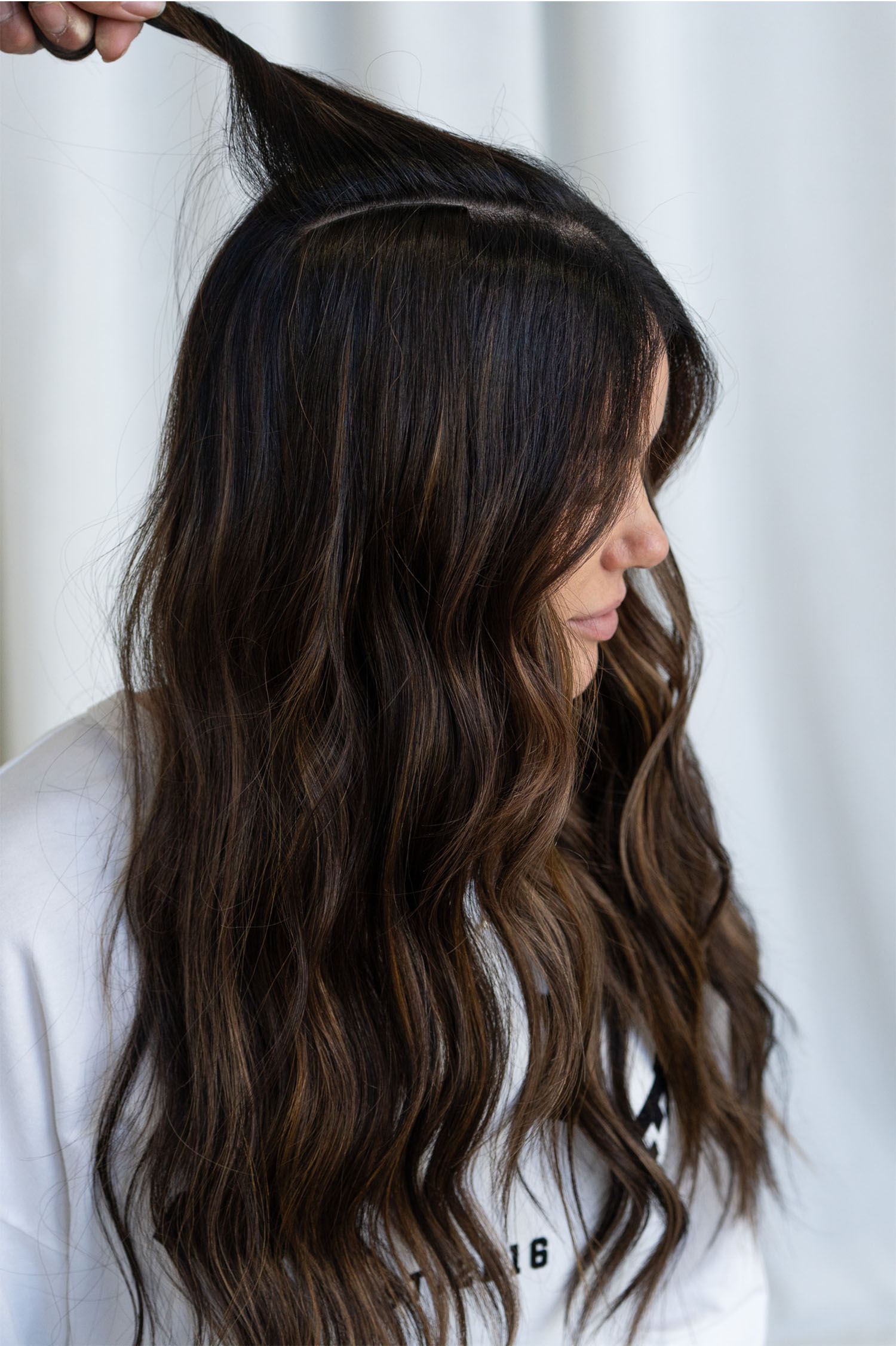
Tape-in extensions are one of the most popular professional methods in Australia because they are lightweight, flat against the scalp, and particularly well-suited to fine or medium hair. They consist of thin wefts attached to your natural hair using medical-grade adhesive tape sandwiching a small section of your own hair.
Hadrill Hair, one of the world’s leading professional extension brands, confirms that tape extensions typically last between 6 and 8 weeks per application before needing repositioning. With proper maintenance, the hair itself can be reused for up to a year or more.
Why every 6 to 8 weeks? Your natural hair grows approximately 1 to 1.5 cm per month. As it grows, the adhesive tape moves further down the hair shaft and away from the scalp, becoming more visible and more likely to slip. A refit appointment involves gently removing the tape, applying fresh tape, and repositioning the weft closer to the root — the hair itself is not wasted.
What Shortens Tape-In Lifespan
- Using conditioners, oils or silicone-based products near the roots or tape area, which break down the adhesive
- Washing hair more than 3 times per week
- Excessive heat styling directly over the tape bonds
- Swimming in chlorinated or salt water without rinsing hair immediately afterwards
- Delaying maintenance beyond 8 weeks, which causes tangling and matting at the root
What Extends Tape-In Lifespan
- Booking your refit at the 6–8 week mark without delay
- Using a sulfate-free, extension-safe shampoo such as Jadore Haircare
- Keeping conditioner and masks on mid-lengths and ends only — never near the bonds
- Sleeping on a silk or satin pillowcase to reduce friction
- Braiding hair loosely before bed to prevent tangling
When tape-in extensions are cared for correctly and re-taped professionally, many clients comfortably wear the same set of hair for 9 to 12 months before replacement is needed, making them an excellent long-term investment.
Keratin Bond (K-Tip / Fusion) Extensions: How Long Do They Last?
Time Per Installation: 3–5 Months
Total Hair Lifespan: 6–12 Months (with Professional Re-Tipping)
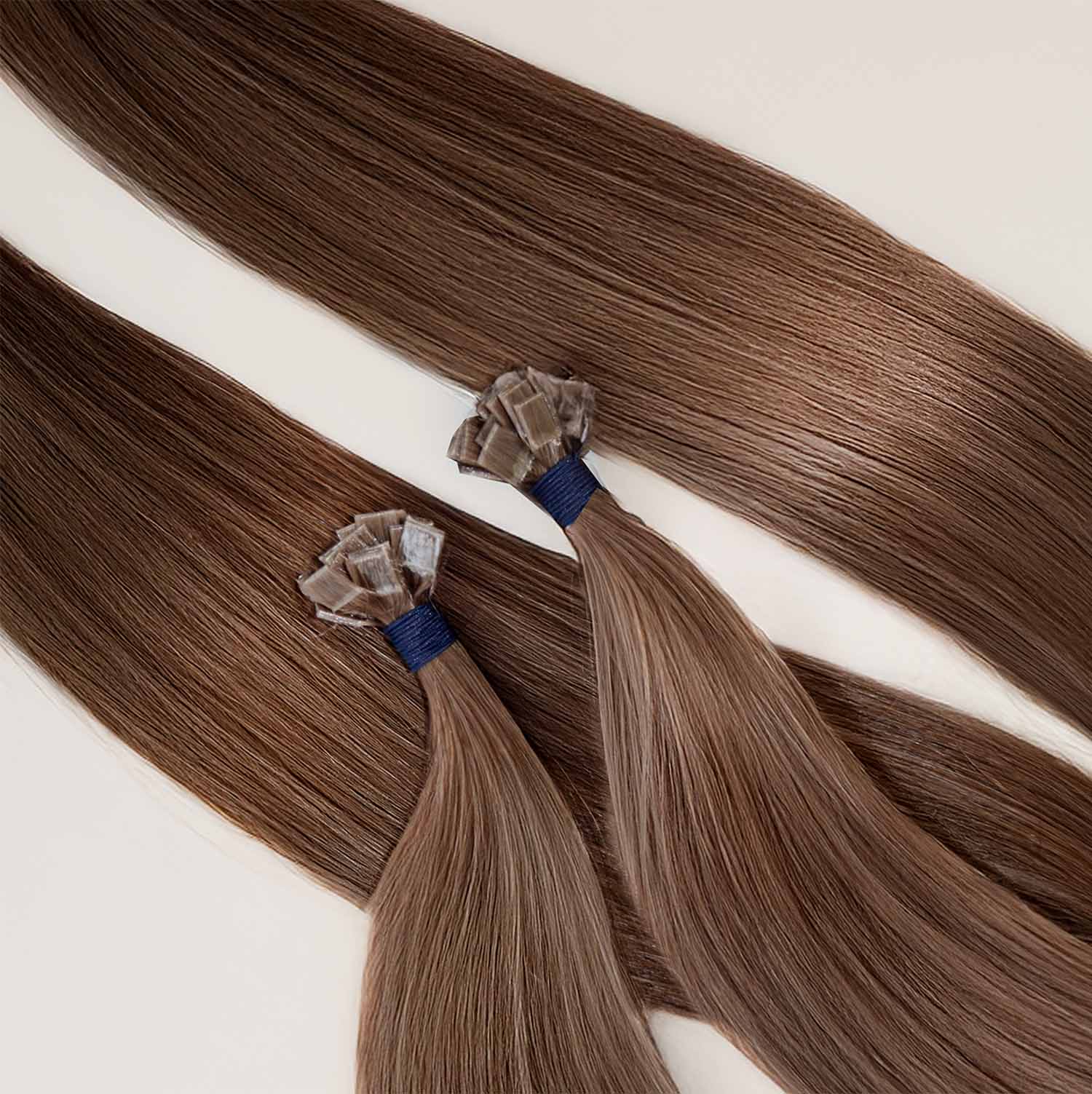
Keratin bond extensions — also called K-tip, U-tip, or fusion extensions — involve attaching individual strands of extension hair to small sections of your natural hair using a keratin-based adhesive heated and shaped by a stylist. The result is individual, seamlessly blended strands that move exactly like your own hair.
Per installation, keratin bonds last 3 to 5 months before the natural hair growth requires professional removal and reinstallation. Unlike tape-ins, keratin bonds are not repositioned during a refit — once the hair grows enough that removal is necessary, the bonds are professionally dissolved, the extension hair is stripped, and new keratin tips are fused if the hair is in good condition to reuse.
The extended wear period (3–5 months versus 6–8 weeks for tape-ins) makes keratin bonds a low-maintenance choice for clients who prefer fewer salon visits. However, they require a longer initial application (typically 3 to 5 hours) and a careful removal process to avoid stressing natural hair.
Keratin Bonds Are Best For
- Medium to thick hair — the bonds hold well on denser hair types
- Clients seeking the most natural, individual-strand movement
- Those who prefer fewer maintenance appointments per year
- Long-term wear with maximum discretion — the bonds are virtually invisible when applied correctly
Care Tips to Maximise Keratin Bond Lifespan
- Avoid heat tools directly over the keratin bond — heat can soften and weaken the adhesive
- Use sulfate-free, oil-free shampoo — oils and silicones near the bonds cause premature slippage
- Do not attempt home removal — professional removal using the correct solvent is essential to prevent breakage
- Book removal before the bonds migrate too far down the hair shaft (beyond 5 months) to avoid tangling and matting at the roots
Nano Ring Extensions: How Long Do They Last?
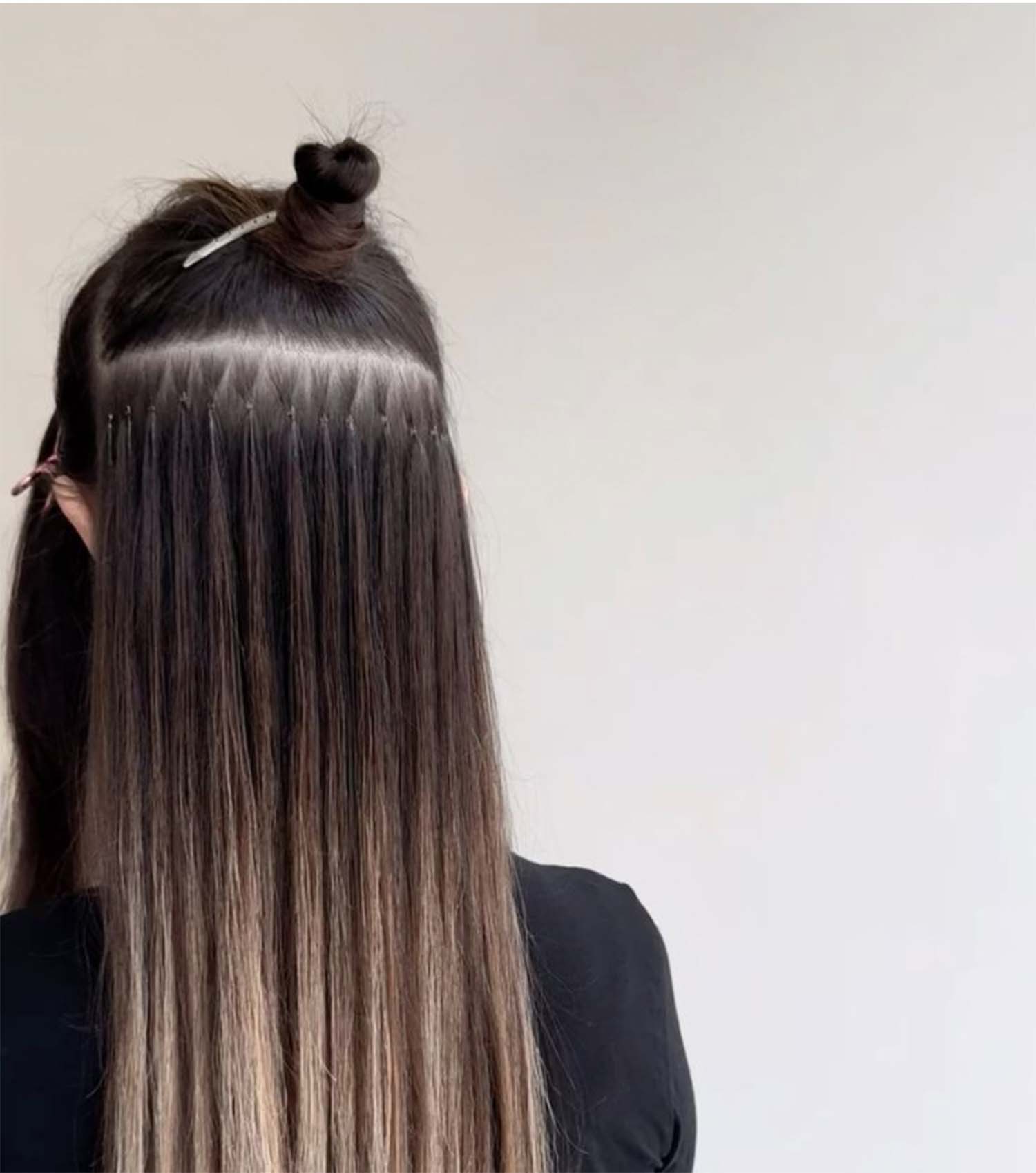
Time Between Appointments: 6–8 Weeks
Total Hair Lifespan: 9–12 Months
Nano ring extensions are attached using tiny metal or silicone-lined rings (beads) that clamp onto a small section of your natural hair without any heat, adhesive or glue. The nano ring is approximately 90% smaller than a standard micro ring, making it nearly invisible and extremely lightweight — an important advantage for clients with fine or sensitive hair.
Nano rings require adjustment every 6 to 8 weeks as natural hair growth moves the attachment point down. However, the hair itself is reusable, meaning a well-maintained set can last 9 to 12 months in total — one of the longest total lifespans of any extension method.
Because no heat or adhesive is involved in the application process, nano rings are often considered one of the least potentially damaging extension methods when installed correctly. The lack of chemical bonding agents also means there is no bond residue to dissolve at removal — the ring is simply opened with a precision tool and the strand slides out.
Care Tips for Nano Rings
- Brush daily with a soft-bristle or loop brush, starting from the ends and working upwards to avoid tugging the ring against the scalp
- Wash 1–2 times per week with a sulfate-free shampoo; avoid rubbing the bead area vigorously
- Do not use excessive heat near the rings — high temperatures can warp the metal
- Book maintenance promptly at 6–8 weeks; delayed appointments allow rings to move too far down, increasing the risk of tangling
Weft Extensions (Hand-Tied & Machine Weft): How Long Do They Last?
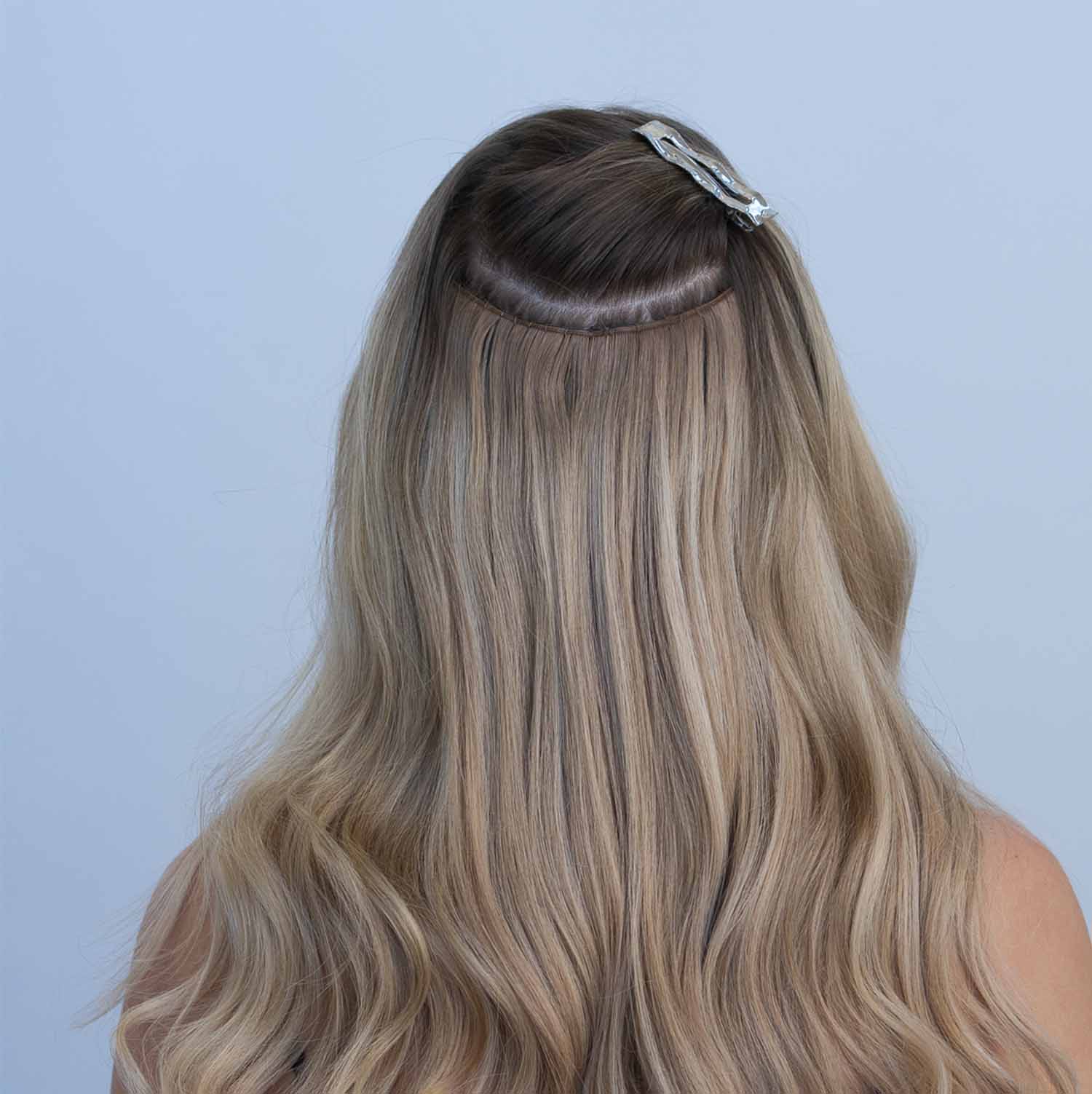
Time Between Appointments: 5–8 Weeks
Total Hair Lifespan: 6–12 Months
Weft extensions — whether hand-tied or machine-sewn — are strips of hair attached into your natural hair across horizontal rows. They are popular for adding both volume and length across a wide surface area in a single application, making them a time-efficient option in the salon chair.
Like tape-ins, weft extensions need to be moved up every 5 to 8 weeks as natural hair grows out. The weft itself, however, is a reusable piece of hair that, when maintained with appropriate products and gentle handling, can be reinstalled multiple times over a 6 to 12 month period.
Hand-tied wefts in particular are valued for their natural movement and the low tension they place on the scalp compared to machine wefts, making them a suitable choice for a wide range of hair types including finer hair when expertly placed by a trained extensionist.
Clip-In Hair Extensions: How Long Do They Last?
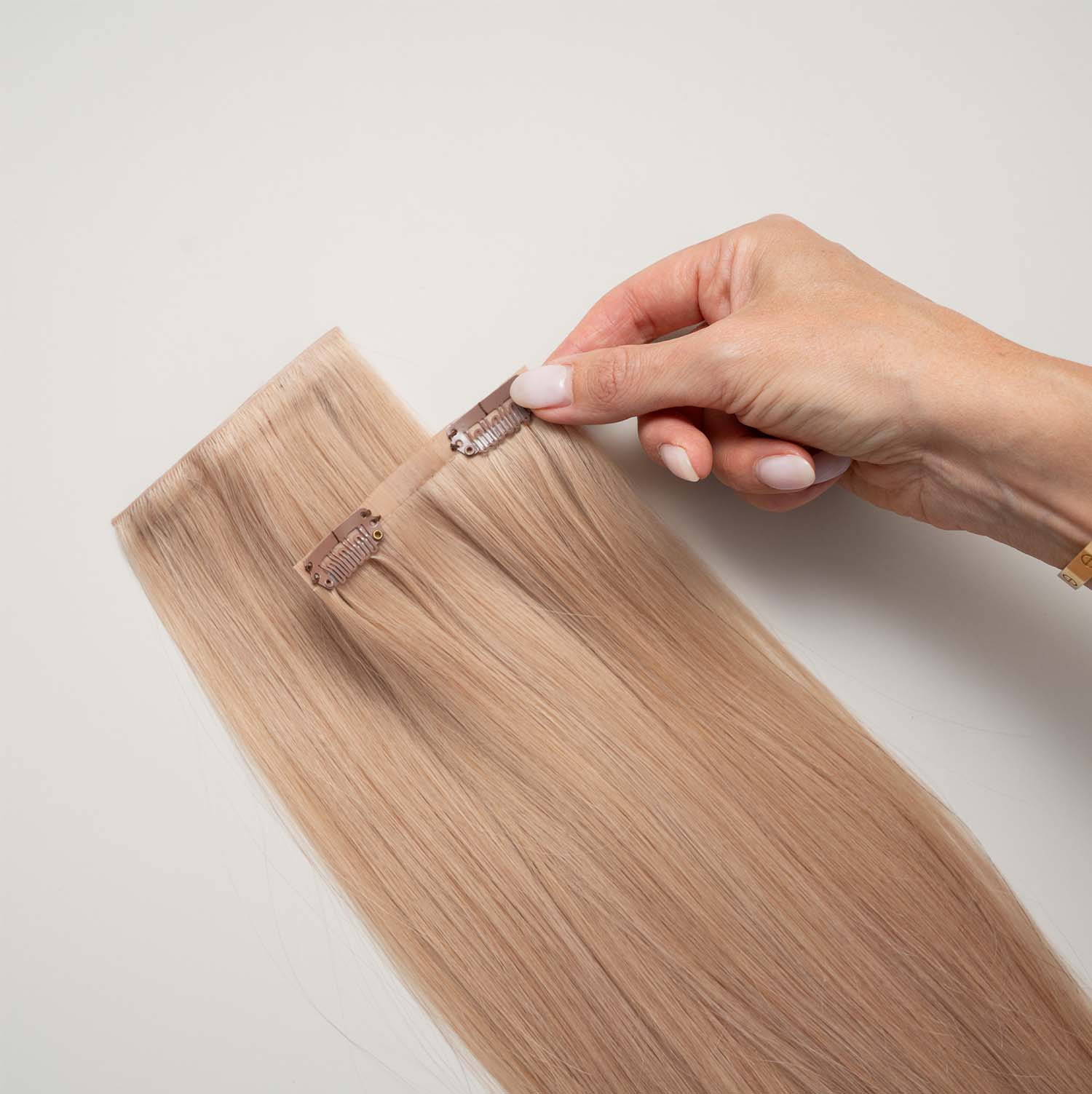
Total Hair Lifespan: 3–12 Months (Depending on Frequency of Use)
Clip-in extensions are the only truly temporary extension method — they are clipped in for the day and removed before sleeping, exercising or washing your hair. Because they are not worn continuously, they last significantly longer per set than semi-permanent methods: up to 9 to 12 months with occasional use, and 3 to 6 months with daily wear.
The biggest variable with clip-ins is how often they are worn and how carefully they are stored. Clip-ins worn daily accumulate heat damage, friction, and product build-up at an accelerated rate. Those used only for special occasions and stored flat in a cool, dry place can remain in beautiful condition for over a year.
How to Make Clip-In Extensions Last Longer
- Wash clip-ins every 12 to 15 uses rather than after every wear
- Always detangle gently before and after wearing — start from the ends and work upward
- Store clip-ins flat or loosely in a box or extension bag — never bundled or compressed
- Avoid sleeping, swimming or exercising while wearing clip-in extensions, as these activities accelerate friction and bond damage
- Apply a light leave-in conditioner or hair oil to mid-lengths and ends after washing to restore moisture
The 7 Key Factors That Affect How Long Hair Extensions Last
Regardless of the method you choose, these seven variables have the greatest influence on how long your extensions look and perform at their best.
1. Hair Quality
The single most significant variable. Professional-grade Remy human hair — in which all cuticles are aligned in the same direction — lasts significantly longer than non-Remy human hair or synthetic fibre. Remy hair typically lasts 6 to 12 months; non-Remy hair begins to tangle and degrade within weeks because its stripped cuticles cause friction between strands.
2. Installer Experience and Technique
Improper installation is one of the leading causes of premature extension failure and, more seriously, hair damage. Research published in the British Journal of Dermatology found that sustained tension from incorrectly applied hair extensions can cause traction alopecia — a form of hair loss resulting from mechanical stress on the follicle. The study found that dermoscopic signs of traction alopecia were evident in all 12 extension-wearing participants examined, even those who reported no hair loss symptoms. Further research published in PMC (PubMed Central) confirms that chronic follicular tension can lead to follicular miniaturisation, fibrosis, and permanent hair loss if left untreated.
At EH Hair Extensions, every stylist undergoes specialist extension training and uses weight-appropriate placement techniques to distribute tension evenly across the scalp.
3. Washing Frequency
Unlike your natural hair, which receives a constant supply of nourishing oils from the scalp, extension hair receives no such nourishment. Every wash strips a small amount of moisture from the hair. Washing semi-permanent extensions more than 2 to 3 times per week accelerates dryness, tangling and bond weakening, which shortens their lifespan considerably. For most clients, washing 1 to 2 times per week is the ideal balance between scalp hygiene and extension longevity.
4. Product Choice
Sulphates — foaming agents found in most mass-market shampoos — strip moisture from the hair shaft and can break down adhesive bonds in tape-in and keratin extensions. Silicones and oil-based products applied near the roots of tape-in extensions weaken the adhesive. Using a shampoo and conditioner specifically formulated for Remy human hair extensions (sulfate-free, protein-free, lightweight) is one of the simplest ways to meaningfully extend the lifespan of any extension type. Read our full guide: Can I Use Any Haircare on My Extensions?
5. Heat Styling
Human hair extensions can be styled with heat tools just like natural hair, but they cannot regenerate or self-repair after damage. Repeated high-heat exposure without a heat protectant will cause the cuticle to lift and fracture, leading to dryness, split ends and a reduced lifespan. Always apply a heat protectant before using any tool over 180°C, and avoid directing heat over adhesive bonds.
6. Swimming, Sun and Environmental Exposure
Chlorine and salt water are particularly harsh on extension hair because they strip moisture and can degrade adhesive bonds. Environmental factors such as UV exposure, wind, and humidity also affect texture and longevity over time. Before swimming, braid your hair and wear it up or under a cap where possible. Always rinse thoroughly with fresh water immediately after swimming, and apply a leave-in conditioner to restore moisture. Read more: How to Care for Your Hair Extensions
7. Maintenance Appointment Timing
Delaying a scheduled refit appointment beyond the recommended window — even by a few weeks — consistently shortens the total lifespan of an extension set. When bonds or rings migrate too far down the hair shaft, they create a lever-arm effect that places excessive tension on the follicle and causes the extension hair to tangle with the natural hair. Prompt maintenance protects both your natural hair and your extension investment.
Why Hair Quality Is the Single Biggest Variable in Extension Lifespan
Not all “human hair” extensions are equal. The term “human hair” on a product label tells you very little about quality. The key distinctions are:
Non-Remy Human Hair
Collected from multiple sources, often with cuticles facing in opposite directions. Manufacturers typically coat non-Remy hair in a silicone layer to disguise this — the hair feels silky in the salon but becomes rough and matted after the first few washes as the coating wears off. This type of hair rarely lasts beyond a few months.
Remy Human Hair
Collected from single donors and processed so all cuticles face the same direction. The cuticle alignment dramatically reduces tangling and gives the hair a natural lustre that does not wash away. Remy hair is soft, tangle-resistant, and styleable exactly like natural hair. With proper care it lasts 6 to 12 months. This is the standard used at EH Hair Extensions.
Virgin Remy Human Hair
Remy hair that has never been chemically processed, coloured or treated. It retains the highest degree of integrity, cuticle strength and natural texture. Virgin hair can be coloured, highlighted and styled without the same limitations that apply to previously processed hair. It represents the longest-lasting and most versatile extension hair available, though it carries a higher upfront cost.
A Note on Chemical Safety in Hair Extensions
A landmark study published in February 2026 by the Silent Spring Institute — a respected cancer-prevention research organisation — analysed 43 hair extension products and detected over 900 distinct chemicals, including flame retardants, phthalates, and organotins, in nearly all synthetic and undisclosed-fibre products tested. As reported by Healthline, many of these chemicals are associated with hormone disruption, reproductive harm, and increased cancer risk. Chemical & Engineering News (American Chemical Society) noted that approximately 10% of products tested contained organotins at levels exceeding European regulatory safety thresholds. At EH Hair Extensions, we use exclusively Remy human hair and maintain full transparency about our supply chain.
Your Maintenance Schedule at a Glance
| Extension Type | Refit Appointment | Recommended Wash Frequency | Expected Hair Replacement Timeline |
|---|---|---|---|
| Tape-In | Every 6–8 weeks | 1–2 times per week | New hair after 6–12 months |
| Keratin Bond | Every 3–5 months | 1–2 times per week | New hair after 6–12 months |
| Nano Ring | Every 6–8 weeks | 1–2 times per week | New hair after 9–12 months |
| Hand-Tied Weft | Every 5–8 weeks | 1–2 times per week | New hair after 6–12 months |
| Clip-In | None required | Every 12–15 uses | New hair after 3–12 months (use-dependent) |
Signs Your Extensions Need a Refit
Even if you are tracking dates carefully, your extensions will often give you clear signals when it is time to book a maintenance appointment:
- Visible bonds or tape: When attachment points become visible through your natural hair, the extension has grown out far enough to need repositioning.
- Slipping or loosening: If individual strands or wefts feel less secure than usual, the bond integrity may be compromised. Do not attempt to tighten at home.
- Increased tangling at the roots: As bonds migrate down, they create a zone of tangling where extension hair and growing natural hair intermingle. Left unaddressed, this can lead to matting that is difficult to resolve without professional help.
- Scalp tenderness or pulling sensation: A persistent pulling or tight feeling at the scalp can indicate that bonds have slipped to a position placing excess tension on follicles. Research confirms that chronic follicular tension is a primary cause of traction alopecia. Book an appointment promptly if you experience this.
- Dryness and increased frizz: As extension hair ages, it loses moisture more readily. A deep conditioning treatment and a product refresh can often restore softness — but it is a signal to check in with your stylist.
Frequently Asked Questions
How long do hair extensions last in total?
For semi-permanent methods (tape-in, keratin bond, nano ring, weft) using professional Remy human hair, the extension hair itself typically lasts 6 to 12 months with proper care and regular maintenance appointments. Clip-ins last 3 to 12 months depending on how frequently they are worn.
Do cheap hair extensions last as long as professional ones?
No. Budget extensions are almost always made from non-Remy human hair or synthetic fibre, neither of which holds up to the washing, styling and daily friction that semi-permanent extensions encounter. Non-Remy hair typically begins tangling and degrading within weeks of the first wash. The cumulative cost of replacing cheap extensions multiple times per year almost always exceeds the upfront investment in quality Remy hair installed by a professional.
Can I make my tape-in extensions last longer than 8 weeks between refits?
The adhesive bonds on tape-in extensions are designed to hold for 6 to 8 weeks. While some clients with very low hair growth rates may stretch this slightly, consistently delaying refit appointments beyond the recommended window causes matting at the root, weakens the bonds, and places increasing tension on natural hair follicles. For optimal longevity of both the extensions and your natural hair, stick to the schedule your stylist recommends.
Can I reuse my hair extensions after removal?
Yes, in most cases. Tape-in hair requires fresh tape (an inexpensive consumable available at the salon); nano ring hair simply needs to be reinserted with a new bead; keratin bond hair needs to be professionally re-tipped. Provided the hair itself is in good condition, the same set can be reinstalled multiple times within its total lifespan of 6 to 12 months.
Which hair extension type lasts the longest?
When measuring total hair lifespan, nano ring extensions consistently rank among the longest-lasting methods, with well-maintained sets lasting 9 to 12 months before replacement is needed. Keratin bonds offer the longest per-installation wear (3 to 5 months between appointments), making them the lowest-maintenance option in terms of salon visits. Book a complimentary consultation at any of our EH Hair Extensions salons for a personalised recommendation.
Do extensions damage natural hair?
When installed correctly with appropriate weight for your hair density, and maintained on schedule, professional extensions applied by a qualified stylist do not cause lasting damage. The risk of damage — particularly traction alopecia — increases significantly with over-tensioning, excessive weight, or delayed maintenance. Read more: Do Hair Extensions Damage Your Hair? The Truth Behind the Myths.
How much do hair extensions cost in Australia?
The cost of professional hair extensions in Australia ranges from approximately AUD $210 to $2,700 for a full-head semi-permanent installation depending on method, hair quality, length, and volume required. According to Airtasker’s Australian hair extension cost guide, tape-in extensions average $210 to $1,900 for a full head; nano-bead extensions average $610 to $2,100; and keratin bond extensions average $1,300 to $2,700. Book a free consultation at any of our EH Hair Extensions salons in Gold Coast, Brisbane, Melbourne or Sydney for a personalised quote.
How long do hair extensions last with swimming?
Frequent swimming in chlorinated or salt water without protection will shorten extension lifespan by stripping moisture and weakening adhesive bonds. Braid hair before entering the water, wear a swim cap where possible, rinse thoroughly with fresh water immediately after swimming, and apply a leave-in conditioner. Clients who swim regularly may find their refit interval shortens from 8 weeks to approximately 6 weeks.