You finally got your dream extensions. What now? How to care for them? What to do? What not to do?
Why Extensions Demand a Different Routine
The fundamental difference between natural hair and extensions is this: extensions do not receive the scalp’s continuous supply of sebum, the natural oil that protects hair from environmental stressors, seals moisture, and shields the cuticle. Without that biological advantage, extensions are more vulnerable to everything from heat damage and colour fade to dryness and breakage. This structural reality means that the care routine you use on your natural hair—daily washing, high heat styling, conventional shampoos—can rapidly degrade extension quality and shorten their lifespan from a year or more to mere weeks.
Professional extension care begins with understanding that less is often more: fewer washes preserve colour, gentler products maintain texture, and strategic protection from friction, heat, and chemicals extends longevity. The routines outlined here are not indulgent extras but essential practices backed by dermatological research and textile science.
The One‑to‑Two Rule: Washing Frequency and Colour Preservation
One of the most consequential adjustments when wearing extensions is reducing washing frequency. Extensions should be washed one to two times per week maximum—a stark contrast to the daily or every-other-day routine many follow for natural hair. Over-washing is one of the fastest routes to rapid colour fading, dryness, and a brittle texture that no conditioner can fully reverse.
Colour-treated hair, and extensions in particular, lose pigment each time they are exposed to water, shampoo, and heat. Hot water opens the hair cuticle, allowing colour molecules to escape; shampooing—especially with sulfate-based formulas—strips both colour and the natural lipid layer that keeps hair hydrated. For extensions, which lack the ongoing oil production of the scalp, this stripping effect is compounded. The result is hair that fades from rich, dimensional tones to flat, brassy shades within weeks rather than months.
When you do wash, use cool or lukewarm water to keep the cuticle closed and prevent colour loss. Pair this with a sulfate-free, color-safe shampoo and follow with a moisturizing conditioner formulated specifically for extensions. Jadore’s hair care range, rich in argan oil and macadamia oil, is designed to nourish extensions without the proteins, sulfates, or parabens that can cause dryness and structural damage. When purchased as part of the haircare bundle, extensions come with an extended warranty, reflecting the brand’s confidence in the formulation’s protective power.
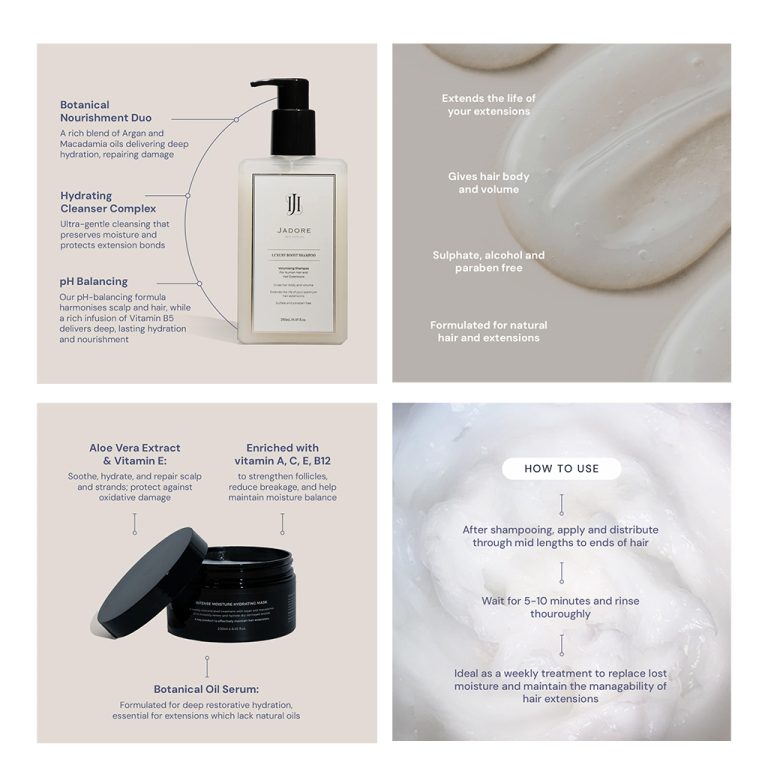
Jadore Hair Extension Hair Care explained.
The Invisible Culprit: Hard Water and the Case for Shower Filters
Tap water quality is one of the most overlooked factors in extension care. Municipal water supplies often contain chlorine (used for disinfection), along with hard water minerals such as calcium, magnesium, iron, copper, and lead. These elements accumulate on the hair shaft, causing a cascade of problems: faster colour fading, dullness, dryness, brittleness, and—for blondes—unwanted brassy or greenish tones.
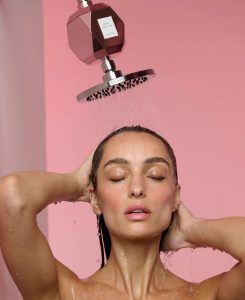
Woman using shower filter. Source: Pinterest
Chlorine in particular strips moisture from hair, leaving it stiff and prone to breakage—a process familiar to anyone who has swum in a pool and felt their hair turn coarse and tangled. For extensions, which do not benefit from the scalp’s replenishing oils, chlorine exposure during every shower accelerates wear. Hard water minerals, meanwhile, form a residue on the hair that prevents products from penetrating effectively, leaving extensions looking lackluster despite regular conditioning.
The solution is straightforward: install a shower filter. High-quality filters remove 95 to 99 percent of chlorine, heavy metals, and mineral content, transforming ordinary tap water into a gentler medium for hair care. Many filters are also infused with Vitamin C, which neutralizes chlorine on contact and provides antioxidant benefits for both hair and scalp. Australian brands such as Fettle Effect and Filtered Beauty, recommended by hairdressers and featured in beauty editorials, represent accessible, effective options for protecting extensions and natural hair alike.
Sunscreen, Chlorine, and the Chemistry of Discoloration
Summer brings its own set of challenges for extension wearers. Sunscreen, an essential for skin protection, can become an enemy to hair—particularly blonde or light-coloured extensions. Ingredients such as avobenzone and octocrylene, common in chemical sunscreens, undergo a reaction when exposed to UV light that can turn blonde extensions peach, salmon, or brassy orange. This discolouration is not surface-level; it is a chemical alteration that cannot be washed out and often requires professional colour correction to reverse.
The prevention strategy is simple but requires discipline: wear hair up in a bun or braid when applying sunscreen, apply products indoors before heading outside, and opt for mineral-based sunscreens containing titanium dioxide or zinc oxide, which do not carry the same staining risk. For those with permanent extensions, this precaution becomes part of the daily routine during warmer months.
Pool and ocean water present similar threats. Chlorine, already present in tap water but concentrated in pools, strips colour and leaves hair dry and brittle. Saltwater acts as a dehydrator, pulling moisture from the hair shaft and leaving extensions coarse and dull. Clip-in extensions are best left at home on beach or pool days; permanent extensions should be worn up or thoroughly rinsed with clean water immediately after swimming.
The Science of Silk: Reducing Friction by a Third
One of the most effective—and under-utilised—tools in extension care is the silk pillowcase. Independent laboratory testing conducted in 2025 measured friction between human hair and both silk and cotton pillowcases across 80 separate tests, with results that were unequivocal: silk reduces hair-damaging friction by 34 percent compared to cotton, while cotton creates 51 percent more friction than silk.

Silk Pillow Case is a must for every woman.
This difference is not cosmetic—it is structural. Cotton’s fibrous texture creates drag and catches individual hair strands during sleep, leading to breakage, split ends, tangles, and frizz. Silk, a natural protein fiber with tightly packed amino acid chains, presents a smooth surface that allows hair to glide without resistance. For extensions, which are already more fragile than natural hair due to the absence of scalp oils, this reduction in mechanical stress translates directly into extended lifespan and preserved texture.
Silk pillowcases are particularly beneficial for curly or textured hair, where friction can disrupt curl patterns and cause breakage at vulnerable points along the shaft. They also support colour-treated hair by minimising the physical stress that contributes to cuticle lifting and colour loss. Jadore’s Ultimate PM Protection Ritual includes a 100% silk pillowcase, pairing it with a silk scrunchie for securing extensions during sleep or workouts—a complete system for reducing friction at every point of contact.
Heat Styling: Temperature Limits and Protective Strategies
Heat styling remains one of the most common causes of extension damage. Unlike natural hair, which receives continuous lubrication from sebaceous glands, extensions must rely entirely on external products for heat protection. Without a heat protectant, exposure to flat irons, curling wands, or blow dryers causes immediate moisture loss, cuticle damage, and a gradual weakening of the hair structure that manifests as dryness, brittleness, and colour fade.
For Remy human hair extensions, the safe temperature ceiling is 180°C (356°F). Exceeding this threshold risks irreversible damage, particularly to the bonds or attachment points where adhesive or thread holds the weft in place. Synthetic extensions, if heat-friendly, should never exceed 120°C.
Professional-grade heat protectants contain a blend of silicones (such as dimethicone or cyclomethicone), natural oils (argan, coconut), proteins (keratin, wheat protein), and vitamins (E, panthenol) that form a protective barrier between hair and heat. Jadore’s Heat Protect & Condition Spray, a best-seller in the range, offers this multi-layered defense, allowing extensions to be styled safely while preserving shine and flexibility.
The broader principle, however, is restraint: limit heat styling to special occasions and embrace heatless methods—foam rollers, pin curls, braids—whenever possible. This approach not only protects extensions but extends their usable life from months into years.
Toning Blonde Extensions: Neutralizing Brass Without Overprocessing
Blonde extensions, whether natural or dyed, are particularly susceptible to brassy yellow and orange undertones. Sun exposure, chlorine, hard water minerals, and even the oxidation that occurs naturally over time can shift cool, ashy blondes toward warm, unflattering tones. Professional colourists emphasize that maintaining blonde vibrancy requires regular toning, not constant recolouring.
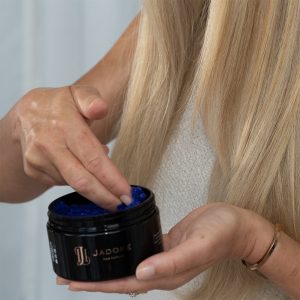
Formulated for regular use to neutralise brass and yellow undertones in blonde or highlighted hair.
Purple toning products work by depositing violet pigments onto the hair, which counteract yellow (their opposite on the colour wheel) and restore a cooler, brighter tone.Unlike purple shampoo, which is rinsed quickly, a purple toning mask is left on for five to ten minutes, allowing deeper penetration and more intensive correction. Jadore’s Blonde Intense Moisturising Mask combines ultra-violet pigments with argan oil and nourishing botanicals, delivering both color correction and hydration in a single treatment.
Frequency matters: toning masks should be used once to twice per fortnight, not weekly or daily, to avoid over-toning, which can turn hair an unnatural ashy or even lavender shade. For those who swim frequently or live in areas with particularly hard water, a weekly application may be necessary, but always with careful attention to processing time.
The Boar Bristle Advantage: Distributing Natural Oils
The tool you use to detangle extensions has a measurable impact on their condition. Conventional synthetic brushes can snag, pull, and create static, all of which contribute to breakage and frizz. Boar bristle brushes, by contrast, are designed to mimic the structure of human hair, allowing them to glide through tangles while distributing the scalp’s natural sebum from roots to ends.
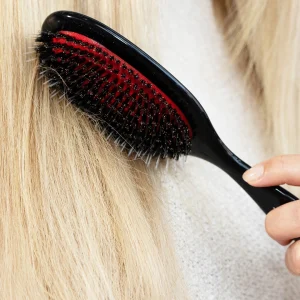
Boar Bristle Brush
This oil distribution acts as a natural conditioner, adding shine, sealing split ends, and reducing the need for leave-in products. Boar bristles also stimulate blood flow to the scalp, which supports hair growth and overall scalp health. For extensions, which do not benefit from scalp oil on their own, brushing with a boar bristle tool after washing helps transfer whatever natural oil is present along the length of the hair, maintaining suppleness and reducing dryness.
Brushing technique is equally important: start at the ends and work upward, never brushing wet hair (wait until it is at least 80 percent dry), and always detangle before washing to prevent matting. Jadore’s boar bristle brush is en
gineered specifically for extensions, with soft-to-firm bristle options depending on hair density and texture.
What to Avoid: Ingredients That Shorten Extension Lifespan
Not all hair products are safe for extensions. Certain ingredients, while marketed as beneficial for natural hair, can cause structural damage, dryness, or buildup on extension hair. The primary offenders are sulfates, parabens, proteins, keratin, and alcohol.[
Sulfates (sodium lauryl sulfate, sodium laureth sulfate) are aggressive detergents that strip both color and the hair’s protective lipid layer, accelerating fade and leaving extensions dry and brittle. Parabens, used as preservatives, can disrupt the hair’s moisture balance. Proteins—often added to “strengthen” hair—can cause buildup and stiffness in extensions, making them difficult to style. Keratin treatments, while temporarily smoothing natural hair, can interfere with extension bonds and degrade the hair fiber over time. Alcohol, particularly denatured alcohol in styling products, is intensely drying and should be avoided entirely.
The Jadore hair care line is formulated explicitly to exclude these ingredients, relying instead on argan oil, macadamia oil, and botanical extracts to cleanse, condition, and protect. This deliberate formulation is why the brand can offer an extended warranty on extensions purchased with the haircare bundle—the products are engineered to preserve, not compromise, hair quality.
Integrating Extension Care Into Daily Life
The routines outlined here are not onerous; they are recalibrations—small shifts in product choice, washing frequency, and styling habits that compound over weeks and months into visibly healthier, longer-lasting extensions. Many clients find that these practices improve not only their extensions but their natural hair as well, leading to stronger growth, reduced breakage, and a scalp environment that supports rather than undermines hair health.
Your extensions, whether worn daily or reserved for special occasions, represent an investment in how you present yourself to the world. Protecting that investment requires understanding the science of hair care: how water quality affects colour, how friction causes breakage, how heat degrades structure, and how the right oils can restore what styling strips away. With the proper care, clip-in extensions can last one to two years, while permanent tape or weft extensions can maintain their quality for six to twelve months or longer.
Hair Extension Care: Essential Questions Answered
How often should I wash my hair extensions?
Wash hair extensions 1-2 times per week maximum. Unlike natural hair, extensions do not receive scalp oils, so overwashing causes dryness and accelerates color fading. Use cool or lukewarm water and sulfate-free, colour-safe products to preserve vibrancy and texture.
Will sunscreen damage my hair extensions?
Yes. Sunscreen ingredients like avobenzone and octocrylene can cause discolouration in hair extensions, particularly blonde shades, turning them peach, salmon, or brassy orange. Always wear hair up when applying sunscreen, apply indoors, or use mineral-based sunscreens with titanium dioxide or zinc oxide.
Do silk pillowcases really help hair extensions?
Yes. Lab-tested research shows silk pillowcases reduce hair friction by 34% compared to cotton, which creates 51% more hair-damaging friction. Silk prevents breakage, split ends, tangles, and frizz, making it especially beneficial for extensions, curly hair, and colour-treated hair.
Should I use a shower filter with hair extensions?
Yes. Shower filters remove 95-99% of chlorine, heavy metals, and minerals from tap water that cause colour fading, dryness, breakage, and brassy tones in extensions. Filters infused with Vitamin C neutralize chlorine while providing antioxidant benefits for healthier hair and scalp.
What temperature is safe for heat styling hair extensions?
For Remy human hair extensions, use a maximum of 180°C (356°F). Always apply heat protectant before styling, and avoid applying heat directly to bonds or attachment points. Extensions lack natural scalp oils that protect against heat, making them more vulnerable to moisture loss and cuticle damage.
Can I swim with hair extensions?
Clip-in extensions should stay home on beach or pool days. Permanent extensions can be worn while swimming if you wear hair up and rinse thoroughly with clean water immediately afterward. Chlorine and salt water strip moisture, cause discolouration, and leave extensions dry and brittle.
How long do hair extensions last with proper care?
With proper care—washing 1-2 times per week, using sulfate-free products, avoiding excessive heat, and protecting from chlorine and sunscreen—clip-in extensions can last 1-2 years, while permanent tape or weft extensions typically last 6-12 months. Many brands offer extended warranties when extensions are purchased with recommended haircare products.
Where to Find Professional Extension Care
The full Jadore haircare line is available online and at Emilly Hadrill Hair Extensions salons across Australia, where extension specialists can provide personalised consultations on product selection, colour matching, and care routines tailored to your specific extension type and lifestyle.
Your extensions have introduced you to a more considered beauty routine—one that not only preserves the investment you have made in your hair but elevates your natural hair health, refines your scalp condition, and even benefits your skin through cleaner water and gentler fabrics. This is the care routine behind flawless extensions: informed, intentional, and built to last.