Blog
How to Choose Shampoo for Your Hair Extensions
September 20, 2026

Choosing shampoo for hair extensions means considering both your scalp and the hair you wear. Your roots may need regular cleansing while your extension lengths need more conditioning, and the products you choose must also suit your attachment method.
At EH, we stock two extension-safe ranges: Jadore Hair Care and Hadrill Hair Care. They are formulated differently, and this guide explains how to read the labels, how the two ranges differ, how to build a practical wash routine and when to ask your stylist for advice.
Before changing shampoo, check the care instructions for your extensions. Tape-ins, bonds, wefts and clip-ins can have different requirements, including where to apply products and how to care for attachment points.
Your extension supplier may also specify products or ingredients as part of its warranty conditions. A shampoo labelled “for extensions” does not automatically meet every supplier’s requirements.
If you are unsure, ask your EH stylist to check your proposed routine against the extensions you wear. Bring the product name or ingredient list so they can give you specific guidance.
These terms often appear together, but they describe separate features of a formula.
Sulphate-free means a shampoo uses cleansing ingredients other than sulphate surfactants such as sodium lauryl sulfate and sodium laureth sulfate. It can still lather and remove oil and product build-up. The label alone does not tell you how mild the finished formula will be.
Protein-free means a formula is made without added protein ingredients, such as hydrolysed keratin or hydrolysed wheat protein.
Silicone-free is a third label you will see. Silicones such as dimethicone and amodimethicone coat the hair to add slip and shine. They are not harmful to extensions, but they can build up over time, and some clients prefer to avoid them.
A shampoo can be sulphate-free and still contain protein or silicone. None of these labels guarantees compatibility with every extension system, so check them against your supplier’s aftercare advice. For a closer look, Hadrill’s guide to sulphate-free shampoo for hair extensions goes into more detail.
Both ranges are sold at EH and both are made for human hair extensions. The difference is in what each formula uses to cleanse and condition the hair. Both publish their full ingredient lists, so the comparison below comes straight from the labels.
Jadore Hair Care is the range many EH clients already know. The shampoo cleanses with sulphate-free surfactants and is designed to add volume. All three products use silicones (dimethicone, cyclopentasiloxane and amodimethicone in the mask) alongside argan and macadamia oils to smooth the lengths and add gloss.
Hadrill Hair Care is the newer, European-formulated range. Every product is protein-free and silicone-free, and The Shampoo is also sulphate-free. Conditioning comes from plant oils instead: sunflower, jojoba, meadowfoam, macadamia and argan in The Conditioner, and eight oils with aloe vera, shea butter, biotin and propolis in The Treatment Mask. The Shampoo is built on olive oil esters with caffeine and rosemary leaf oil.
| Jadore Hair Care | Hadrill Hair Care | |
|---|---|---|
| Sulphates (SLS/SLES) | None | None |
| Silicones | Yes, in shampoo, conditioner and mask | None across the range |
| Protein | None listed in the INCI; conditioner copy mentions amino acids | None across the range |
| Conditioning approach | Silicones plus argan and macadamia oil | Plant oils, shea butter and aloe vera |
| Finish | Lightweight volume, smooth and glossy | Soft and refreshed, no coating build-up |
Neither range is “better” in general. Some clients prefer the slip a silicone conditioner gives; others prefer an oil-based, silicone-free formula, or need to avoid protein because of their extension supplier’s guidance. Your stylist can recommend one based on your hair, your extension method and how your lengths are behaving.
These two concerns can happen together. Extension lengths do not receive the same natural scalp-oil supply as your own hair, so they can need conditioning even when your roots feel ready for a wash.
Focus on where each product is needed:
If your hair feels different after a change in products, discuss it with your stylist before changing several parts of your routine at once.
The Hadrill three-step range includes The Shampoo, The Treatment Mask and The Conditioner, also available together as The Trio.
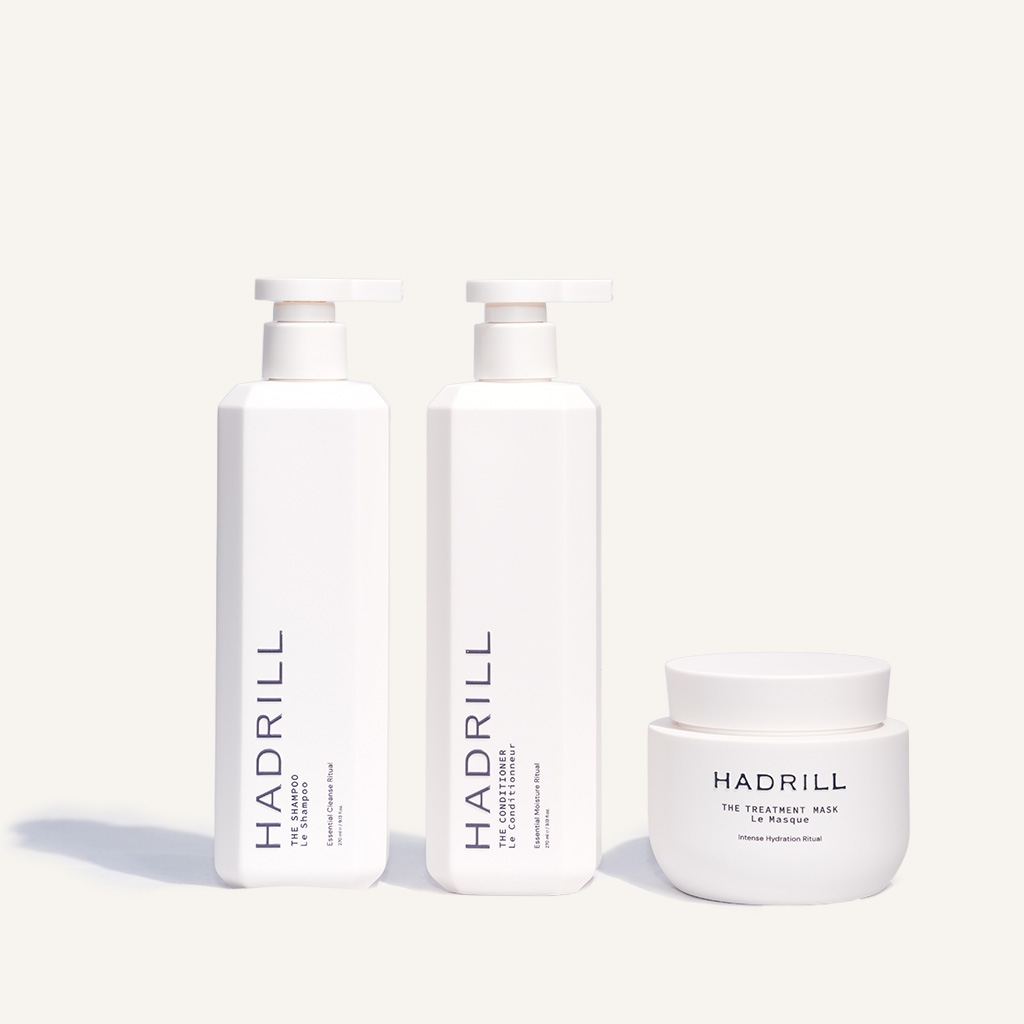
For a Hadrill routine that suits your extensions:
On regular wash days: use The Shampoo, rinse thoroughly, then follow with The Conditioner through the lengths.
On treatment days: use The Shampoo first, apply The Treatment Mask and rinse, then finish with The Conditioner.
Follow the individual product directions and your extension supplier’s guidance on placement. A mask does not need to be added to every wash, and using more product is not necessarily the answer to dry-feeling hair.
If you use Jadore, the same order applies: shampoo, mask on treatment days, then conditioner through the mid-lengths and ends. Ask your EH stylist which range and treatment frequency make sense for your current routine.
How you handle and dry your extensions matters alongside your shampoo choice.
Gently press out excess water rather than rubbing the lengths. Detangle in small sections, supporting the hair and working from the ends upwards with the brush your extension specialist recommends.
For fitted extensions, follow your stylist’s instructions for drying the attachment area thoroughly. Avoid sleeping with wet hair, and keep to your recommended maintenance appointments. Our article on how to care for your hair extensions covers brushing, sleeping and styling in more detail.
Persistent matting, slipping attachments, discomfort or repeated tangling near the scalp needs a stylist’s assessment. Changing shampoo may not resolve a fitting or maintenance issue.
Avoid pulling at tight knots or working conditioner into attachment points to loosen them. Contact the salon for advice.
Whether you are choosing your first extension-care routine or reviewing one that no longer feels right, your next EH appointment is a useful time to talk it through.
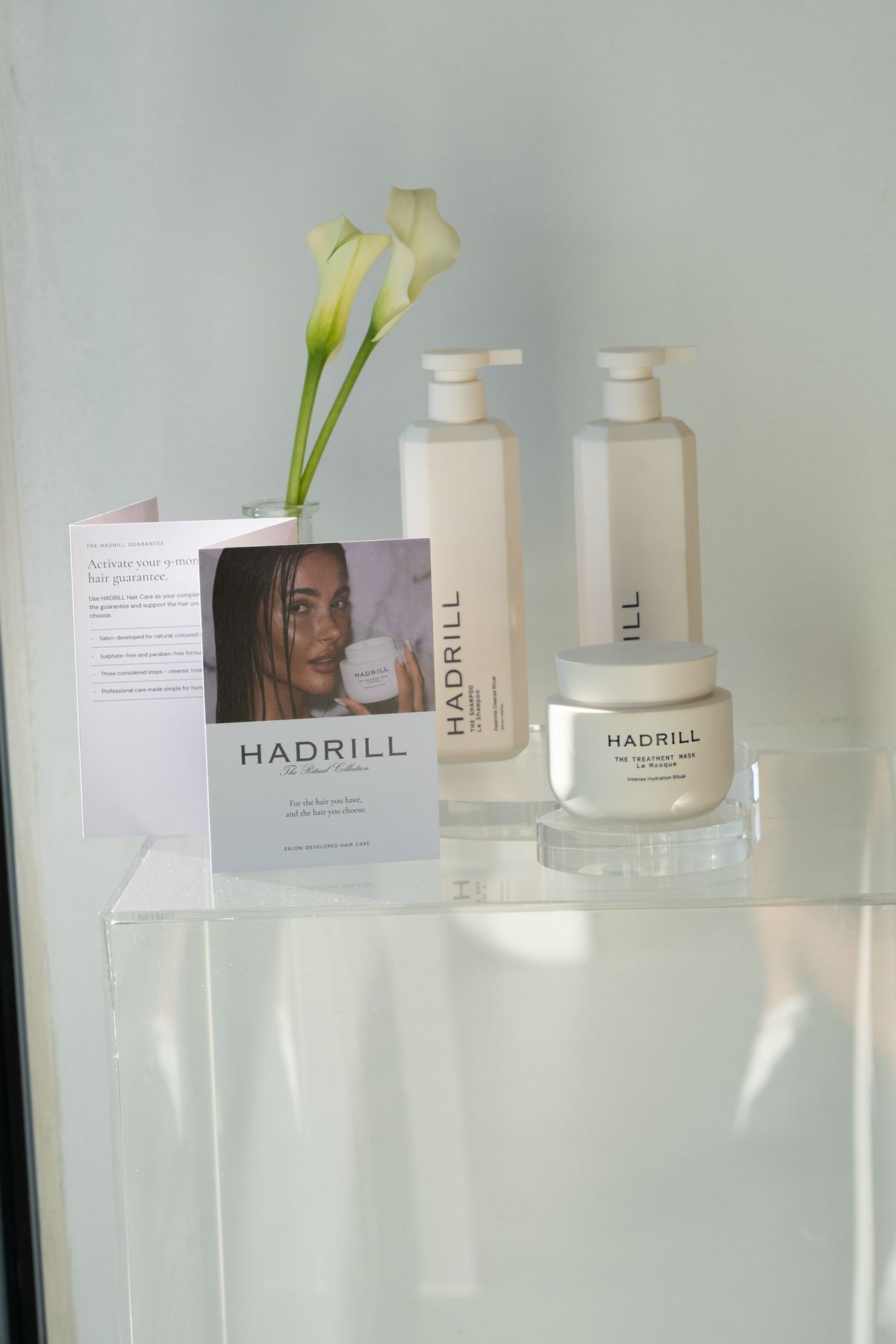
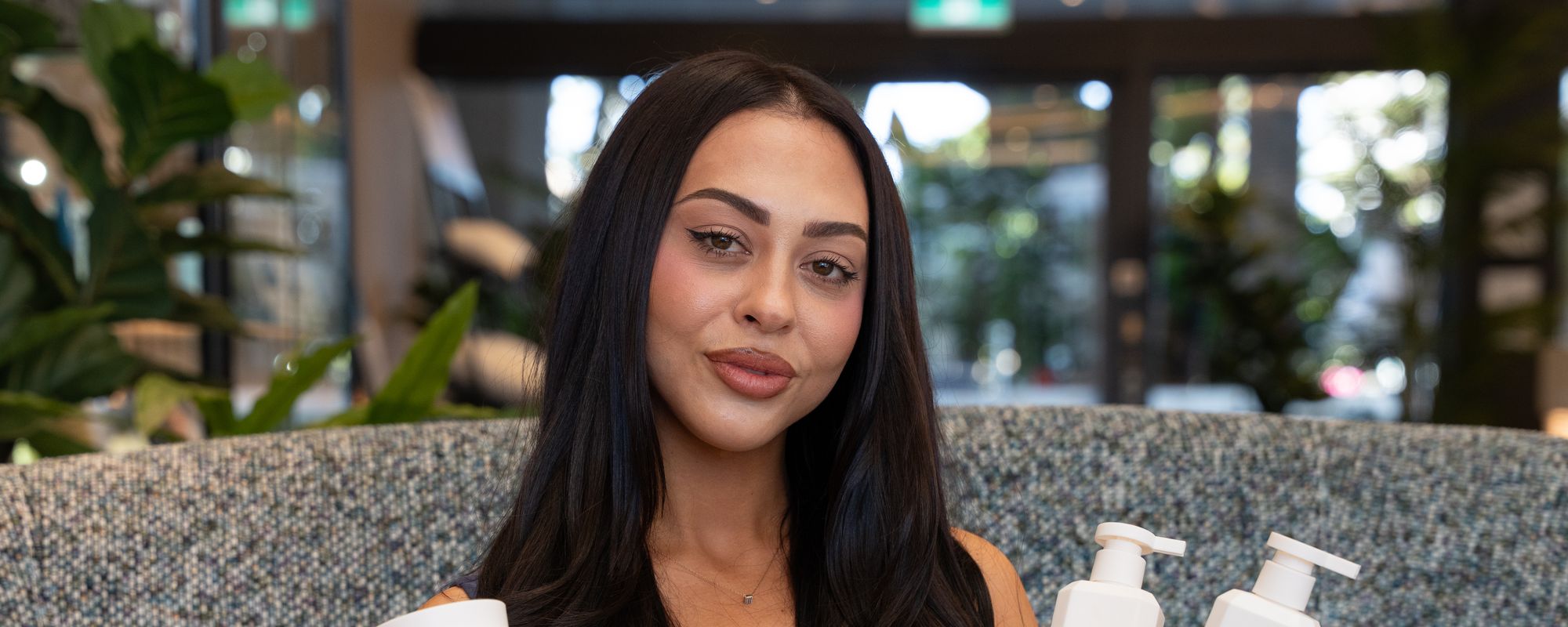
Hadrill Hair Care on the shelf at EH.
Ask your EH stylist about Jadore and Hadrill Hair Care and an aftercare routine suited to your extensions. Book an appointment at our Gold Coast, Brisbane, Sydney or Melbourne salon, or call 1300 181 000.